Author: Mehar Packers and Movers Date: 29/11/2025 12:20 PM
In India, a lot of people end up moving from one place to another for work, studies, or family reasons, and along with that comes the need to shift their car also. From outside, it might look like an easy job – you just put the car on a big truck and send it – but in reality, the whole thing has many small steps that movers follow quietly in the background. These steps are what keep the car safe on long roads, and most people don’t really notice them until they see the process up close.
People usually trust movers because they don’t want to drive long distances, deal with traffic, or add extra kilometres to their vehicle. Highways in our country can be unpredictable, so professional movers have their own way of handling car shifting smoothly. Let’s walk through it in a simple way.
We check the car properly before taking it
The first thing movers do is take a slow walk around the car. They note whatever is already there – like small scratches, tyre condition, a loose sticker, or if something looks dented already. This is not done to trouble the customer; it’s actually for clarity later. Both sides know the exact condition before the journey starts.
Most people don’t realise how many small things lie inside their car. Old bills, coins, tiny bottles, spare cloth pieces… so movers normally ask you to empty everything. Anything loose inside can roll around during travel and cause trouble later. It’s a simple thing that helps avoid unnecessary confusion.
Fuel is kept low for safety during travel
Movers always ask customers to keep just a little fuel, enough only for loading and unloading. Many people wonder why, but it’s mainly for safety. Full tanks add weight and can heat up during long travel. So keeping less fuel actually makes the whole journey safer.
This is something people don’t pay much attention to, but movers follow it as a basic rule.
The car is locked tightly using wheel clamps and belts
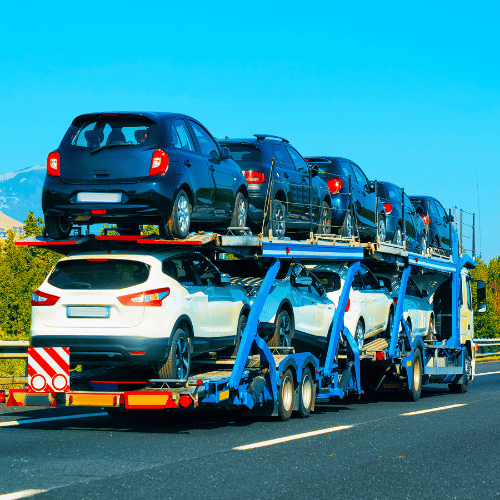
Inside a car carrier, there’s a proper arrangement to keep vehicles steady. Movers drive the car slowly onto the ramp and align it correctly. Then they use wheel clamps and heavy belts to hold it in place. These locks stop the car from rolling even a little when the truck takes turns or faces bumps on highways.
If these belts are loose, even a slight movement can cause unwanted marks. So the team double-checks everything before the carrier starts. Some movers even add soft padding around mirrors and bumpers, especially when the vehicle is new or expensive.
Car carriers are built for long and rough Indian highways
Movers use different kinds of carriers depending on the situation. You might have seen open carriers on the road that carry five or six cars at once. These are fine for normal cars and short distances. Then there are closed carriers that keep the vehicle covered from dust, stones, and rain. Many people prefer them for interstate shifting.
There are also small single-car trailers that move only one car at a time. These are mostly used for premium car shifting.
Whatever the type, carriers usually have shock absorbers, metal tracks, and railings.
Drivers follow a fixed route and take planned breaks
Driving a loaded carrier is not the same as driving a normal truck. Movers usually assign drivers who are trained specially for transporting cars. They know which routes are safer, where to avoid bad roads, and where to take small breaks.
During these breaks, they check:
– If the wheel locks are still tight
– If the belts are in place
– Tyre pressure
– Any vibration or sound inside the carrier
Customers get updates at main points
One thing that keeps people relaxed during the move is regular updates. Most companies keep you informed at a few points during the trip. It could be after the truck leaves the city limits, somewhere around the middle of the journey, or once it comes close to the destination. Some teams have a tracking system on their trucks, while others simply call and give a plain update so you know where things have reached.
Either way, customers get to know where their car has reached. It reduces the worry because the car is not just a vehicle – for many people it’s something they bought with hard-earned money, so they naturally want to know how far it has travelled.
Unloading is done slowly and with extra care
Unloading actually takes more attention than loading. Ramps are lowered slowly, and the car is reversed very gently. Movers don’t rush this part because the risk of scratches is highest while bringing the car down from the carrier.
They guide the driver with hand signals or small instructions and check each tyre’s direction. After the car is safely out, both sides usually do another quick walk-around to confirm everything looks fine. Some movers also help with dropping your car at doorstep.
Why do people choose to move their cars
Taking a car on a long route feels nice in the beginning, but after some time you realise it’s not that simple. Long highways, changing weather, big vehicles passing close, and the need to stay alert the whole way can drain you faster than you expect. Movers take care of all this. Their job is to shift without any trouble, and they follow a set pattern for safety.
Another reason people avoid driving is to prevent adding unnecessary kilometres to their car. Long drives increase wear and tear, and sometimes even cause tyre or engine stress. Using a mover avoids all that.
Conclusion
Many people only see start-and-finish. The car goes from their gate and shows up at the new address. What happens between those two points is the actual effort. Once you know how the whole thing works, you feel more confident about giving your car to a professional team. When the steps are done with care, the vehicle usually reaches fine, even if it has travelled a long stretch.